
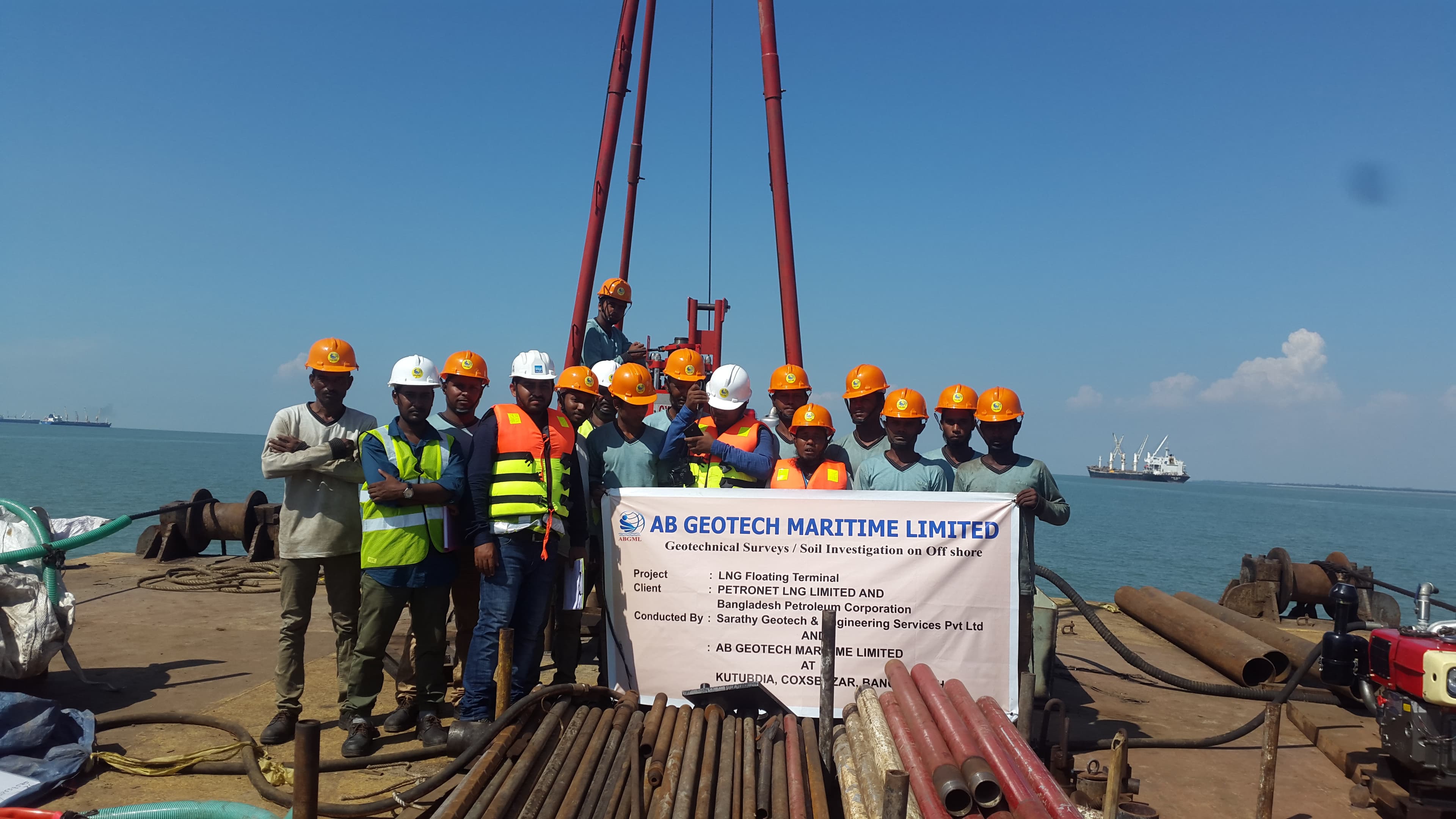
Deep Tube Well Services
AB GEOTECH MARITIME executes both monitoring/test wells and full production tubewells using a hydraulic rotary drilling rig — with complete methodology and execution planning for every stage, from site mobilization to final well commissioning.
01 — Test / Monitoring Well
A total of 1 (One) monitoring well of 2” will be drilled in the project area. Direct circulation drilling methods will be used. During drilling a Hydrogeologist/Civil Engineer will be present at the drill site and will record lithological variability with depth at an interval of 10 feet. Lithological samples will be collected for laboratory analysis for all aquifer and aquitard intervals encountered during drilling. A total of 9 (Nine) sediment samples will be sent to laboratory for sieve analysis. After successful completion of drilling, 15m screens/strainers will be installed in the borehole. Afterward, well development will be done using mechanical compressor until the water becomes turbidity free. At last stage the well will be disinfected using bleaching powder. After successful establishment of monitoring/test well groundwater sampling will be executed and 1 (one) water sample will be collected and test for pH, CO2, chloride, fluoride, iron, manganese, nitrate-nitrogen, total alkalinity, total hardness, arsenic and turbidity in laboratory.
An execution plan for test tubewell drilling involves a structured sequence of site preparation, exploratory/test boring, aquifer sampling, and water quality testing to determine underground water viability.
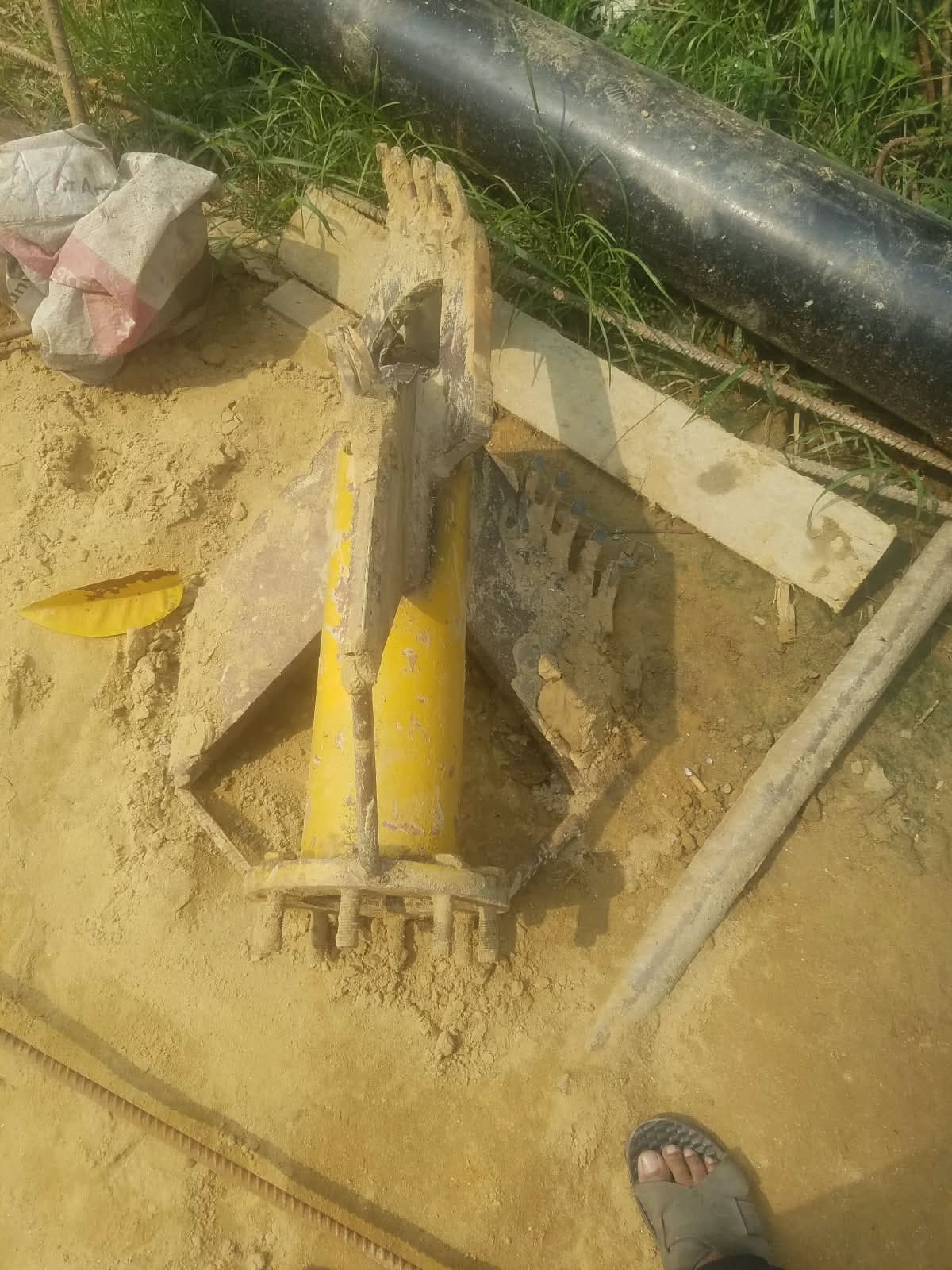
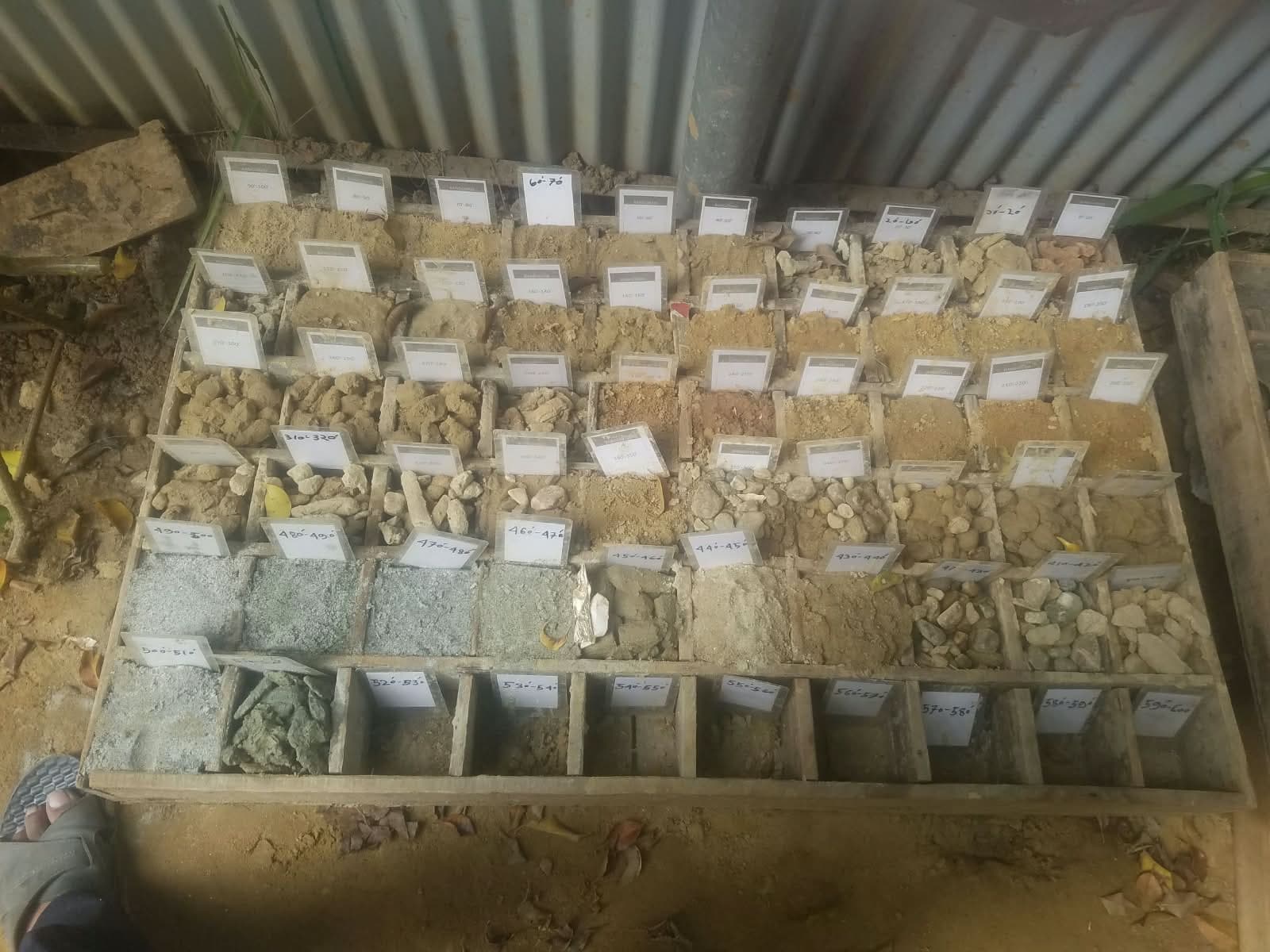
Sediment samples logged and preserved by depth at every drilling interval, forming the lithological profile of the site.
Site Selection: Hydrogeologist along with client’s representative will conduct site selection and mark the exact drilling spot.
Setup: Transport and position the drilling rig, set up all necessary accessories for rig up, prepare mud pumps, confirm and connect water and power source.
Safety: Establish a safe work zone, set up containment for drilling fluids, and prepare emergency and safety protocols.
Drilling of Well: Drill a 2 Inches diameter test hole using 5 Inches cutter by rotary method.
Lithological Logging: Collect sediment samples at regular intervals (every 3 meters) to record the subsurface lithological profile.
Aquifer/Water Bearing Zone Identification: Identify productive water-bearing sand layers and confined aquifers depending on thickness of the sediment layer.
Pipe Installation: Lower permanent uPVC pipe and strainer pipes in the target aquifer depth.
Gravel Packing: Place graded gravel around the screen zone for sand filtration. Fill up rest of the annulus: after placement of gravel, rest of the annulus is filled using cutting sand recovered during drilling.
Development: Wash and surge the bore using compressor to remove fine silt and drill mud until clear water is achieved.
Disinfection: The bore will be disinfected using bleaching powder.
Water Sampling: Collect water samples from target aquifers for laboratory testing.
Laboratory Analysis: Test water for physical, chemical, and biological parameters including pH, CO2, chloride, fluoride, iron, manganese, nitrate-nitrogen, total alkalinity, total hardness, arsenic and turbidity.
Final Report: Prepare a technical evaluation report detailing aquifer characteristics and design recommendations for a main bore/production well.
02 — Production Well
A total of 1 (One) production well of 12”/6” will be drilled in the project area. Direct circulation drilling methods will be used with hydraulic drilling rig. During drilling a Hydrogeologist/Civil Engineer will be present at the drill site and will record lithological variability with depth at an interval of 10 feet. Lithological samples will be collected for preparing the lithological log. After successful completion of drilling, 42m screens/strainers will be installed in the borehole. Afterward, well development will be done using mechanical compressor until the water becomes turbidity free. At last stage the well will be disinfected using bleaching powder. After successful establishment of monitoring/test well an aquifer pump test will be executed 72 hours constantly. Finally, a pump motor of required quality will be installed in the housing with set up of control panel.
The execution plan outlines the standard procedures for drilling, constructing, and testing a deep production tubewell using a hydraulic rotary drilling rig.
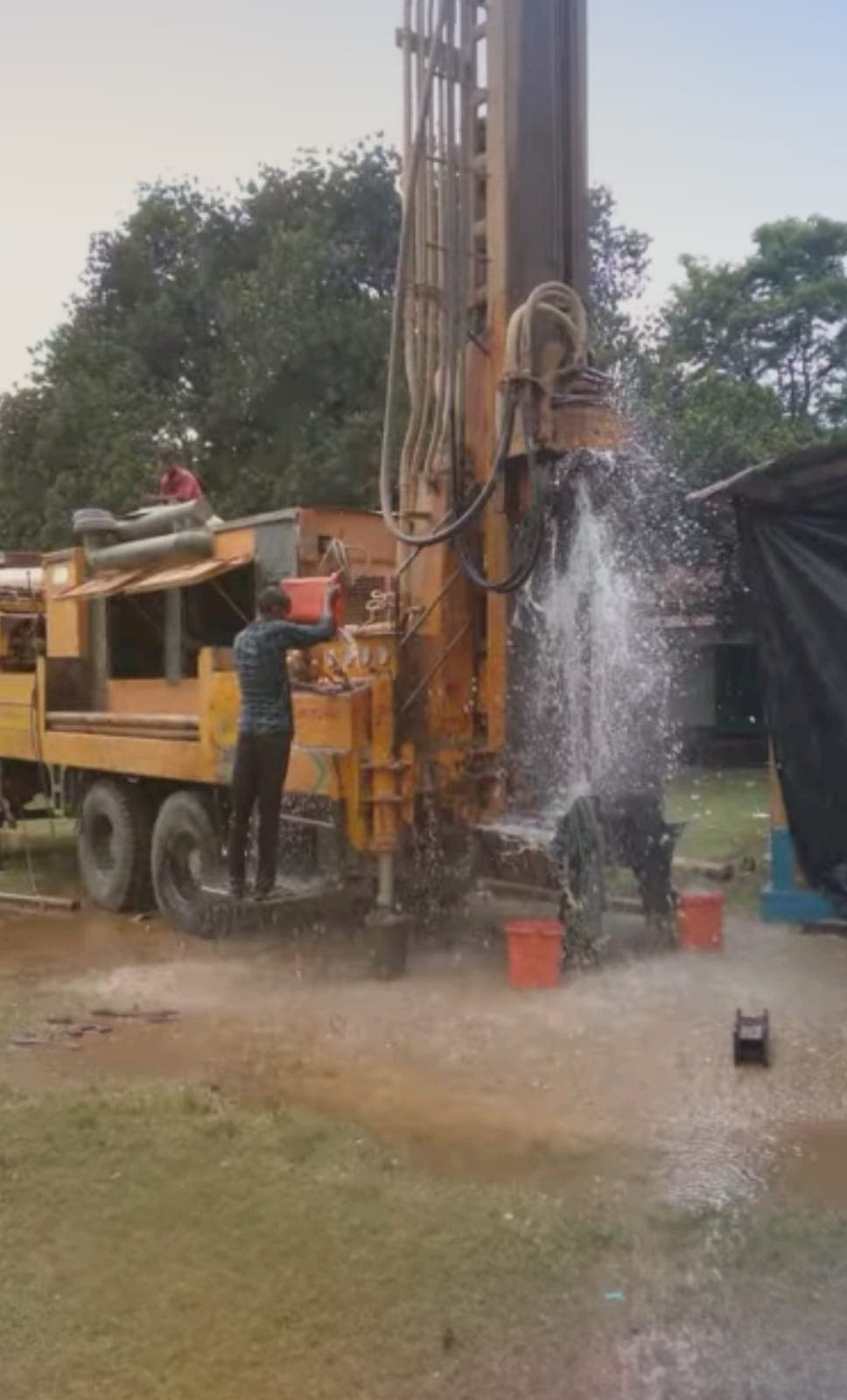
Drilling continues in shifts, with casing pipes staged on site ready for installation as the borehole advances.
Site Clearing: Level the ground to support a heavy weight hydraulic rig.
Pits Digging: Prepare standard mud circulation pits.
Material Storage: Storage of well casings, screens, gravel packing, and drilling chemicals (bentonite).
Water Supply: Secure a high-volume water source for mixing drilling mud.
Power Supply: Secure the power source for the rig and other operations.
Hole Drilling: Drill 24-inch hole using 38-inch drill bit for casing drive. Drill a 6-inch using 12-inch cutter pilot hole to the target depth using a tricone bit. Drill 12-inch housing section using 24-inch cutter.
Mud Monitoring: Maintain mud density to prevent borehole collapse.
Lithological Logging: Collect sediment samples every 3 meters (10 feet) and preserve.
Well Design: Finalize the depths for the blind casings and slotted well screens.
Lowering Blind and Strainer Pipes: Flush the borehole and lower the blind and strainer assembly carefully into the hole.
Gravel Packing: Pour washed, sorted gravel into the annular space.
Jetting: Wash the screen sections with high-pressure water jets and Calgon chemicals.
Air Surge: Deploy a mechanical air compressor to alternate between surging and pumping out muddy water until the water runs clear.
Static Water Level (SWL): The baseline water level before pumping.
Step Drawdown Test (SDT): Pump the well at 4 increasing discharge rates for 1 to 2 hours each.
Constant Rate Test (CRT): Pump continuously at the design yield for 72 hours.
Recovery Test: Measure the water level recovery immediately after shutting off the pump until it reaches 90% of static level.
Dynamic Water Level (DWL): The water level measured at specific time intervals during pumping and recovery stage.
Disinfection: Treat the well with bleaching for 24 hours.
Pump Motor Installation: Install required capacity pump motor and set up the control panel.
Capping & Sanitary Seal: Install a sanitary seal and fix a steel well cap keeping the motor cable and wire out through the cap’s central hole.
Rig
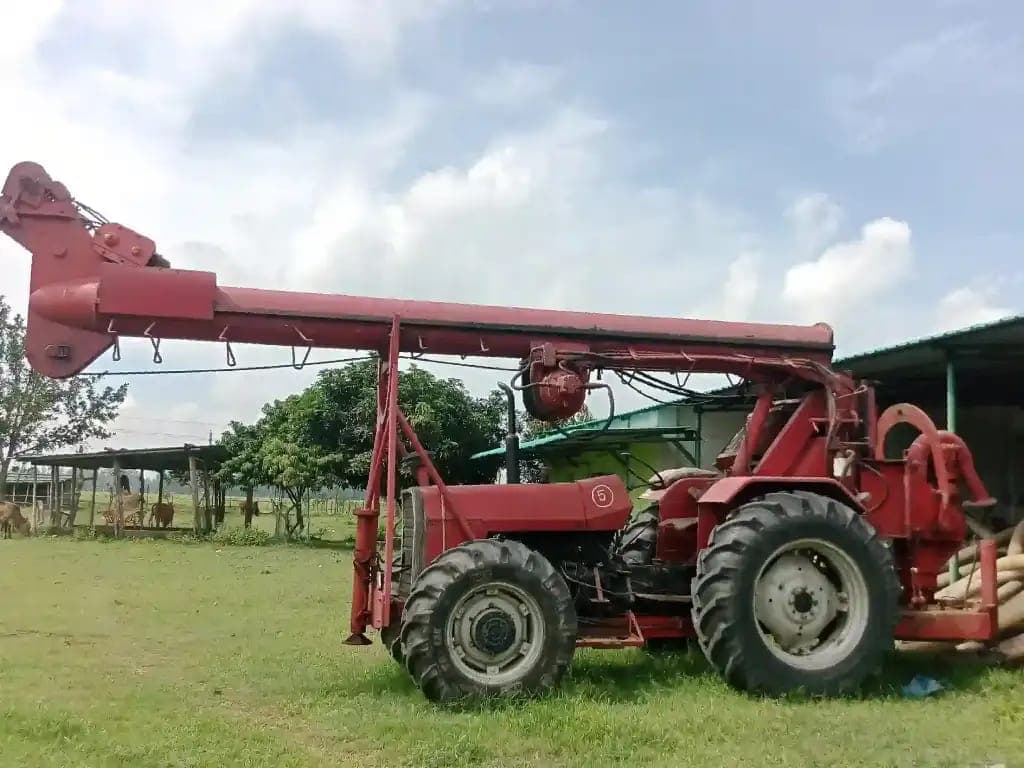
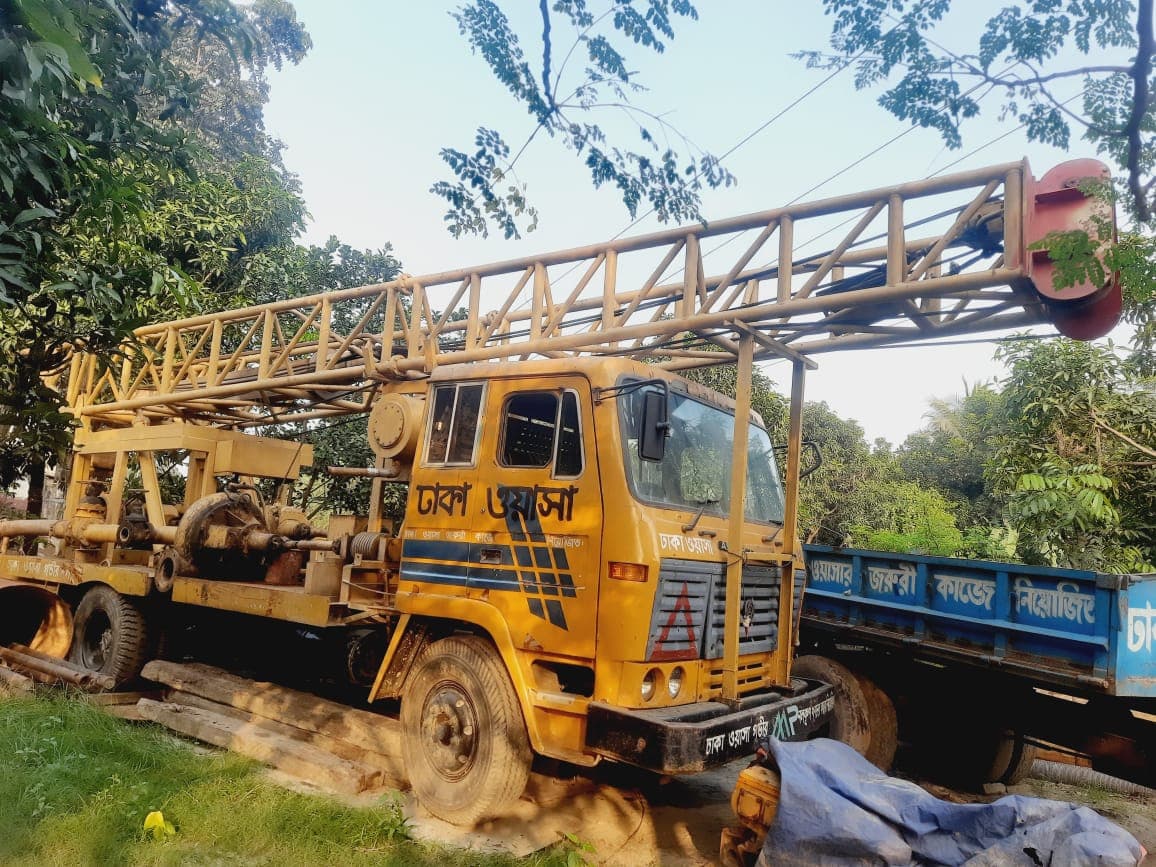
Both test/monitoring and production well operations are carried out using hydraulic drilling rigs matched to the site — tripod rigs for tight urban plots, truck-mounted rigs for road access, and tractor-mounted rigs for open field locations.
Quality Assurance
Water samples collected from the test well are tested in laboratory for pH, CO2, chloride, fluoride, iron, manganese, nitrate-nitrogen, total alkalinity, total hardness, arsenic and turbidity — forming the basis for the technical evaluation report and design recommendations for the main bore/production well.
From the Field
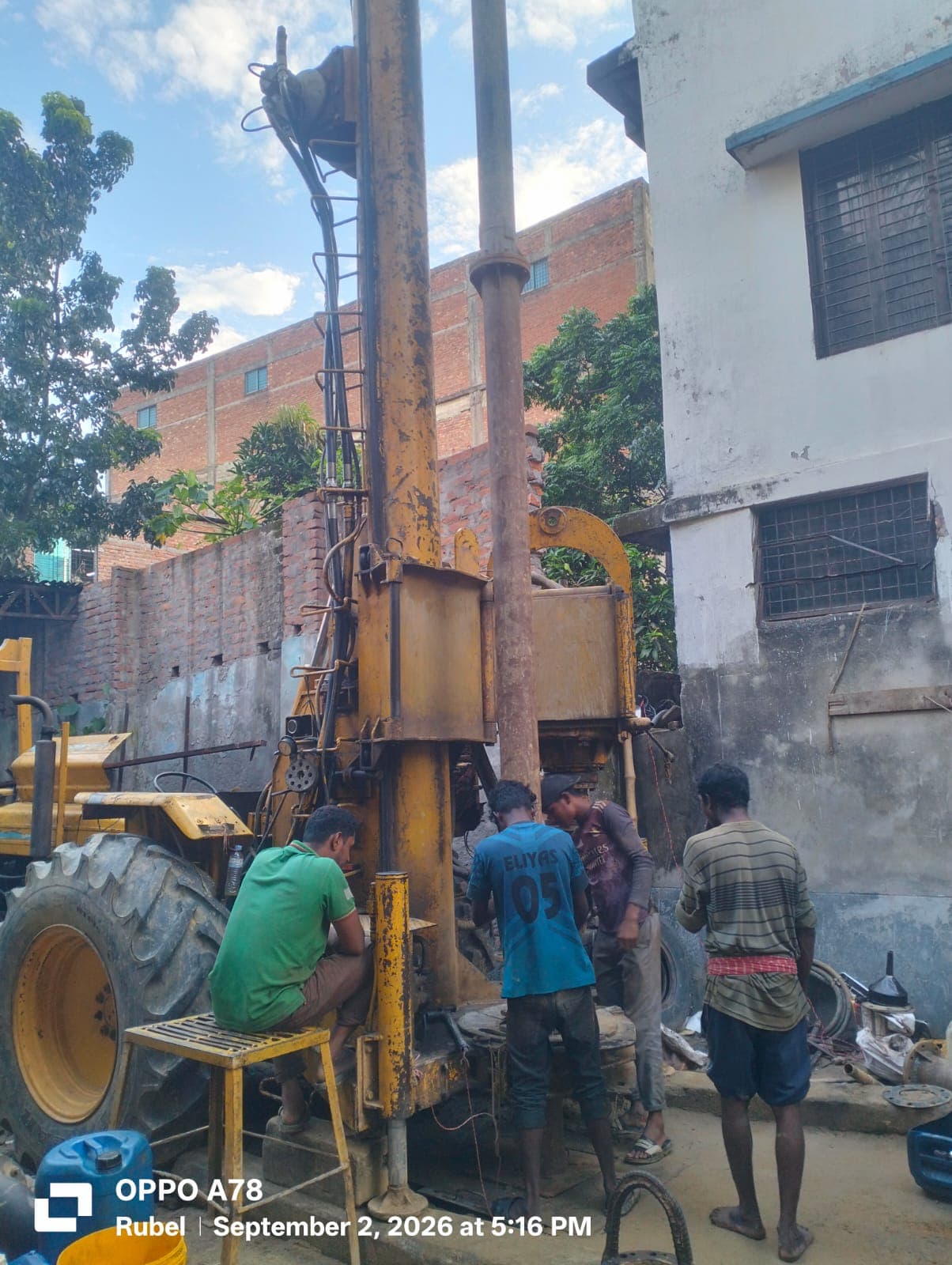
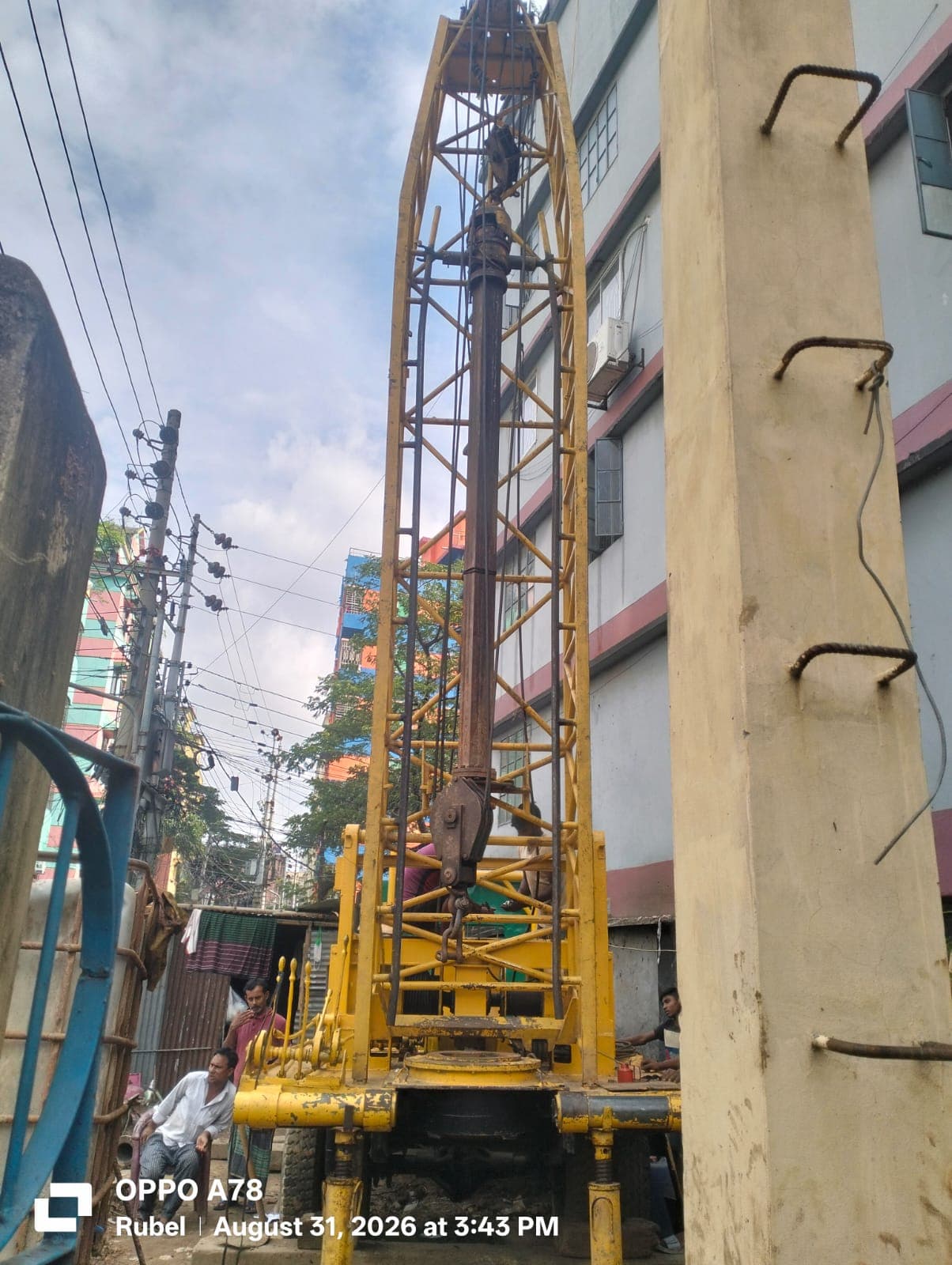
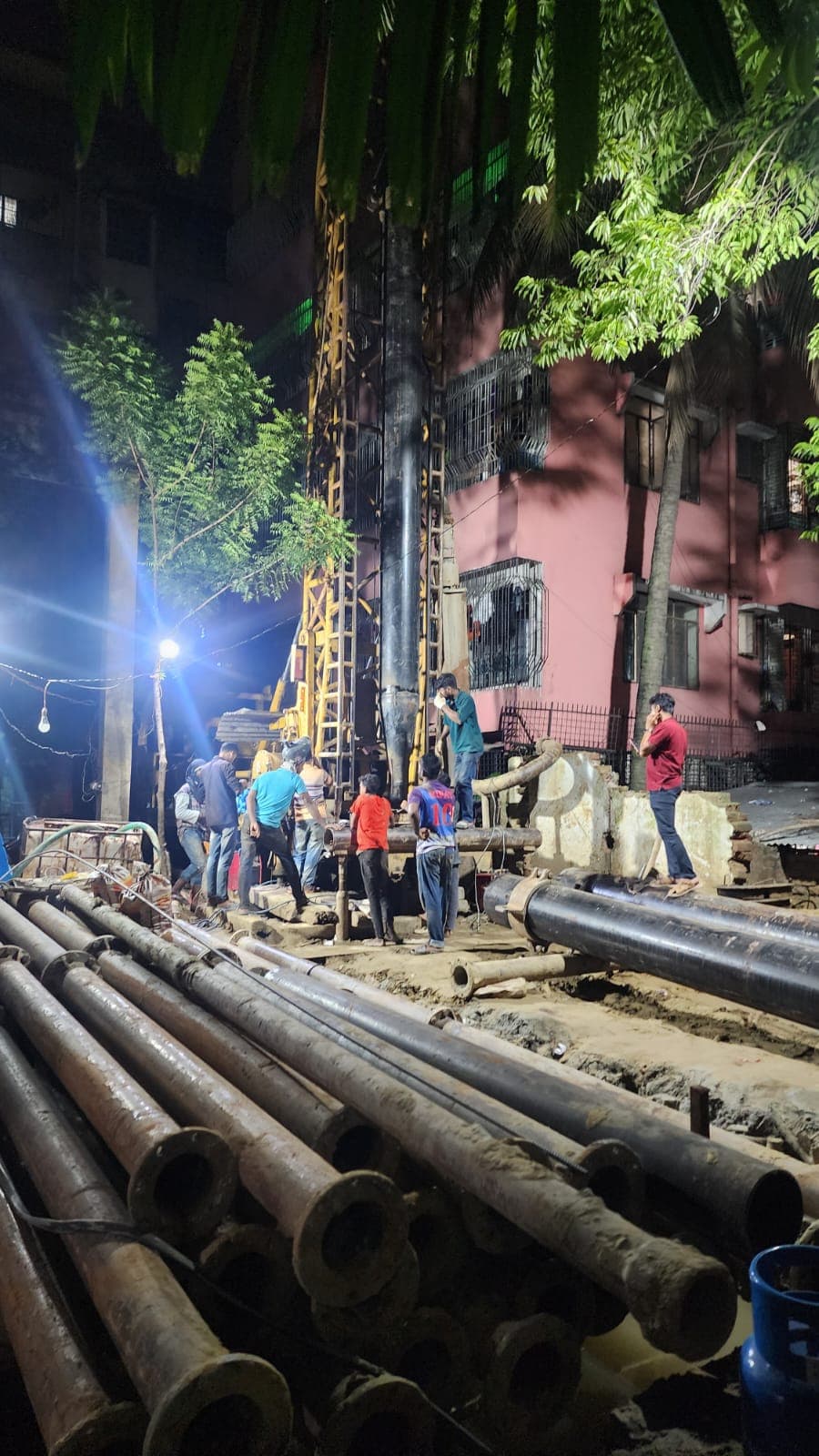
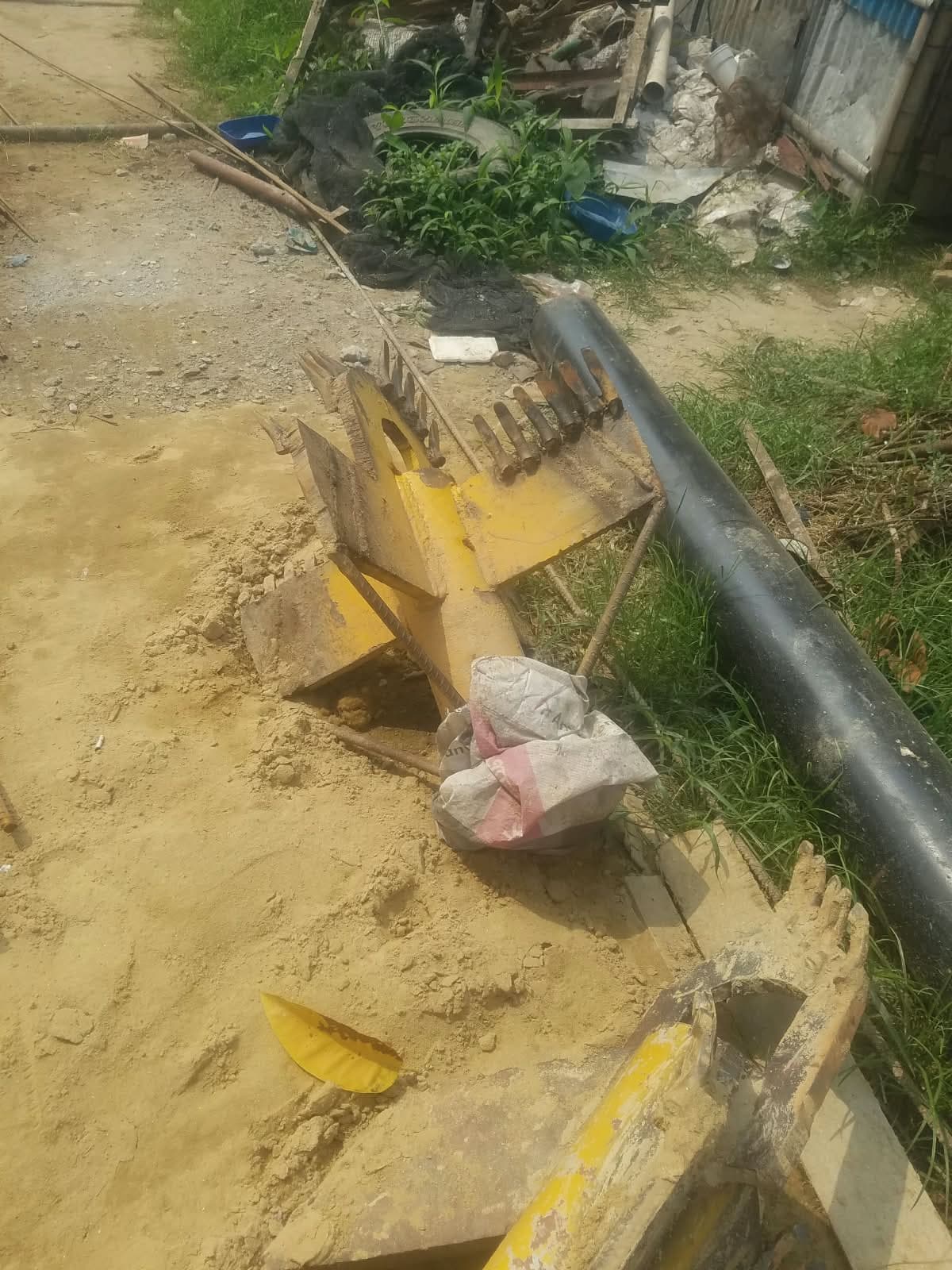
Our hydrogeologists, civil engineers and equipment operators work as one team on site — from the first borehole to the final technical evaluation report — so every well performs as designed.
Talk to our team about site assessment, drilling methodology, and full execution planning for your tubewell project.
Contact UsHouse-325, Road-13, Block-B, Chandgaon R/A, Chittagong-4212, Bangladesh
Rtn. Avijit Barua MPHF. BBM (India), MBA (India), MCSE, DBA,
Expert Contributor
WORLD BANK GROUPManaging Director
AB GEOTECH MARITIMEProject Director
HAPAX SHIPPING
Dhaka Office
House No: 64 (2nd Floor), Road No. 03, Block-B, Niketon, Gulshan-1, Dhaka-1212
China Office
Shanghai Aidu Energy Technology Co., Ltd.
No. 466, Chengjian Road, Minhang District,
Shanghai, China
Thailand Office
66/135 SOI Nawamin77, Bueng Kum,
Bangkok-10240
Singapore office
Bright Hill Ship Service 14, Jalan Hari Raya, Singapore 578106 PIC: MR PC CHUA
